
Guide to AI in Accounting: Trends, Tools, and Stats
Guide to AI in Accounting: Trends, Tools, and Stats
Introduction: The Rise of AI in Accounting
The world of finance is evolving rapidly, and one of the biggest drivers of this transformation is AI in accounting. Traditional accounting methods, which once relied heavily on manual data entry and repetitive processes, are now being replaced by intelligent systems that can analyze, predict, and automate tasks with incredible speed and accuracy.
With businesses generating massive amounts of financial data every day, the need for smarter systems has become essential. This is where artificial intelligence in accounting is making a powerful impact. From small businesses to large corporations, companies are adopting AI-driven solutions to improve efficiency, reduce errors, and make better financial decisions.
What is AI in Accounting?
AI in accounting refers to the use of advanced technologies like machine learning, automation, and data analytics to perform accounting tasks more efficiently. Instead of relying solely on human effort, AI systems can process large volumes of financial data, identify patterns, and generate insights in real time.
Artificial intelligence in accounting is not just about automation—it’s about enhancing decision-making. These systems can learn from past data, detect anomalies, and even provide predictive insights that help businesses plan for the future. This makes accounting not only faster but also more strategic and data-driven.
Key Applications of AI in Accounting
One of the most important aspects of AI in accounting is how it is applied in real-world scenarios. AI is transforming multiple areas within accounting, making processes smarter and more efficient.
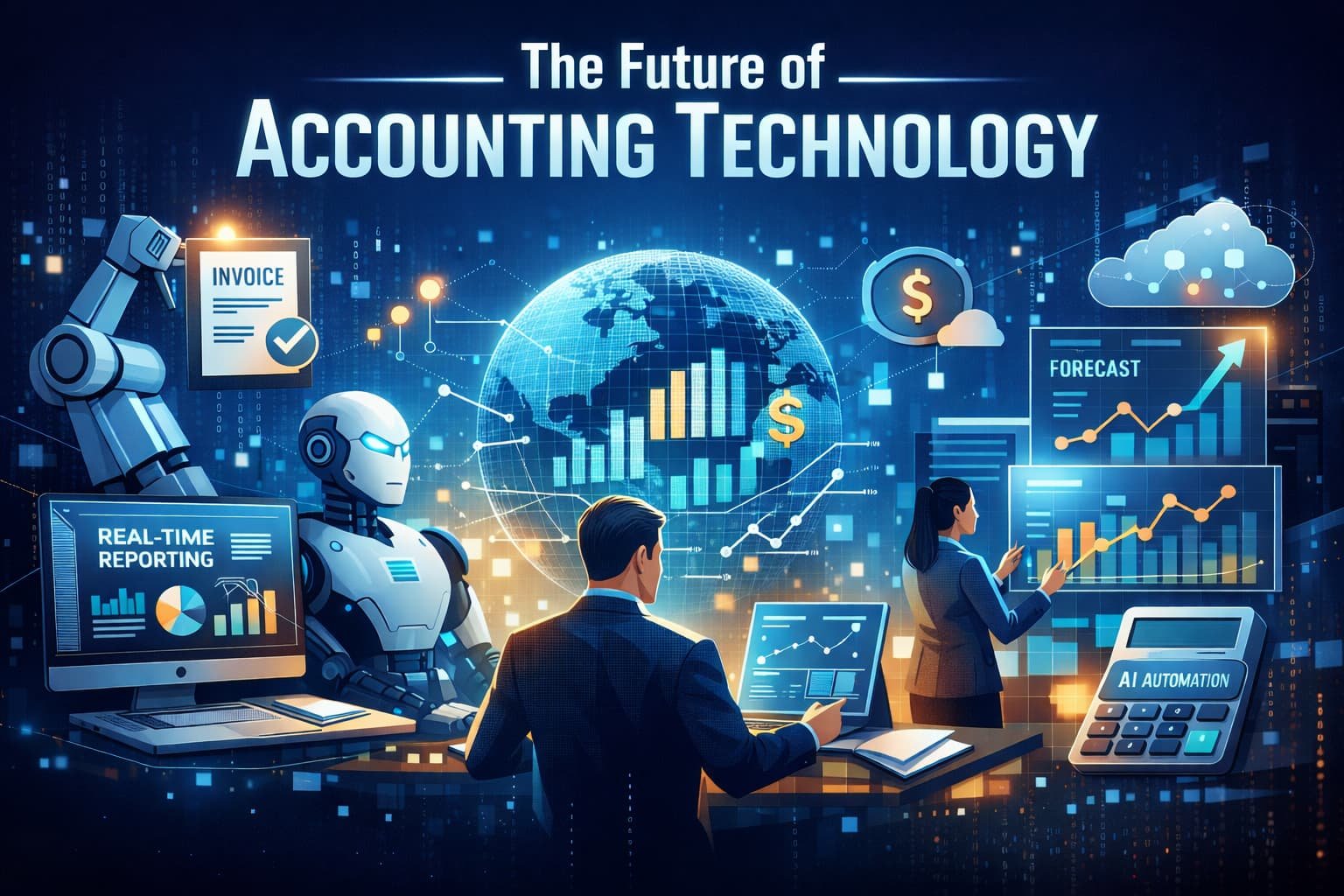
Automation is one of the most common applications. Tasks like invoice processing, data entry, and reconciliation, which once required hours of manual work, can now be completed within seconds using accounting automation tools. This allows professionals to focus on more valuable tasks rather than repetitive work.
Fraud detection is another powerful use of artificial intelligence in accounting. AI systems can analyze patterns in financial transactions and quickly identify unusual activities that may indicate fraud. This level of accuracy is difficult to achieve through manual monitoring alone.
Data analysis has also become more advanced with AI. Instead of just recording financial data, AI tools can interpret it, generate insights, and help businesses make informed decisions. Machine learning in finance plays a key role here by continuously improving the accuracy of predictions and analysis.
Popular AI Tools in Accounting
The adoption of AI accounting software has increased significantly in recent years, with many tools designed to simplify and enhance accounting processes.
Popular accounting automation tools include platforms that handle bookkeeping, expense tracking, and financial reporting with minimal human intervention. These tools use artificial intelligence to categorize transactions, detect errors, and provide real-time financial insights.
Some tools also integrate with business systems, allowing seamless data flow between departments. This improves overall efficiency and ensures that financial information is always up to date. As accounting technology trends continue to evolve, these tools are becoming more advanced and user-friendly.
Benefits of AI in Accounting
One of the biggest advantages is efficiency. AI can process large volumes of data much faster than humans, reducing the time required to complete accounting tasks. This allows businesses to operate more smoothly and respond quickly to financial changes.
Accuracy is another major benefit. Manual accounting processes are prone to errors, but AI systems can minimize mistakes by automating calculations and data entry. This leads to more reliable financial records and better decision-making.
Cost savings also play an important role. By automating routine tasks, businesses can reduce labor costs and improve productivity. This makes AI accounting software a valuable investment for organizations of all sizes.
Latest Trends and Statistics in Modern Accounting Technology
The accounting industry is undergoing a major transformation as intelligent technologies become a core part of financial operations. Businesses today are no longer relying solely on traditional methods; instead, they are adopting smarter systems that can handle complex tasks with speed and precision. The growing adoption of AI in accounting reflects a clear shift toward automation, data-driven decision-making, and real-time financial management.
One of the most significant trends is the automation of routine accounting tasks. Processes such as invoice generation, expense tracking, reconciliation, and financial reporting are increasingly being handled by advanced systems. This shift is allowing organizations to reduce manual workload while improving consistency and accuracy. Instead of spending hours on repetitive tasks, professionals can now focus on analyzing data and improving business outcomes.
Another important development is the rise of predictive analytics and intelligent data processing. Modern financial systems are not just recording past transactions—they are helping businesses anticipate future trends. By analyzing historical data, companies can forecast revenue, identify potential risks, and make proactive decisions. This level of insight is especially valuable in competitive markets where quick and informed decisions can make a significant difference.
Real-time reporting is also becoming a standard expectation. Businesses want instant access to their financial data so they can respond quickly to changes in the market. This has led to the development of integrated platforms that provide live dashboards and automated insights. As a result, decision-making has become faster, more accurate, and more strategic.
At the same time, the role of accounting professionals is evolving. Instead of focusing on data entry and basic calculations, they are becoming advisors who interpret financial information and guide business strategy. This transformation highlights a key reality—technology is not replacing human expertise but enhancing it by enabling professionals to work smarter and deliver greater value.
Future of Accounting with Intelligent Technologies
The future of AI in accounting is set to reshape how financial systems operate at every level. As technology continues to advance, accounting will move beyond its traditional role and become a central part of business strategy. Organizations will increasingly rely on intelligent systems not just for automation, but for insights that support long-term planning and growth.
In this evolving landscape, the role of accountants will become more strategic and analytical. Professionals will spend less time on routine tasks and more time understanding financial patterns, advising leadership, and contributing to decision-making processes. This shift will require a combination of technical knowledge and business understanding, making the role more dynamic and impactful.
Another major change will be the integration of financial systems with other business functions. Accounting will no longer operate in isolation; instead, it will be closely connected with departments such as marketing, operations, and sales. This integration will create a unified flow of data, allowing organizations to make decisions based on a complete view of their performance.
As new technologies continue to emerge, new career opportunities will also develop. Roles focused on financial data analysis, system management, and technology integration will become more common. Professionals who are open to learning and adapting will find themselves in a strong position to take advantage of these opportunities.
It is important to understand that this transformation is not about replacing jobs but about redefining them. The demand for skilled professionals who can combine accounting knowledge with technological expertise is expected to grow significantly in the coming years.
Conclusion: How Professionals Can Adapt to the Changing Landscape
The rapid evolution of the accounting field presents both challenges and opportunities. While automation is reducing the need for manual work, it is also creating space for more meaningful and impactful roles. Professionals who embrace this change will be able to build stronger, more future-ready careers.
Adapting to this new environment requires a willingness to learn and evolve continuously. Accountants must become comfortable working with modern tools, understanding data, and interpreting insights. Developing skills in analytics, digital platforms, and financial strategy will be essential for staying relevant in the industry.
In addition to technical skills, professionals should focus on improving their ability to think strategically and communicate effectively. As their role shifts toward advisory and decision-making, these skills will become increasingly important. Organizations are looking for individuals who can not only manage data but also provide valuable insights that drive growth.
Ultimately, success in this new era depends on adaptability. Those who are proactive, curious, and willing to embrace new technologies will not only survive but thrive in the changing landscape of accounting.
Final Thought
The future of accounting lies in the collaboration between technology and human intelligence, where professionals use advanced tools to enhance their capabilities, make smarter decisions, and create lasting value for businesses.